Showing posts with label liquid watercolour. Show all posts

Wednesday, April 1, 2026

Half chicken


In this lesson students draw one chicken together. 

What do you need? 
  • drawing sheet 
  • oil pastels
  • blue liquid water color
  • brush
  • jar with water
What should you do? 
  1. Fold a sheet in half.
  2. Draw  half a chicken against the fold. 
  3. Color with oil pastels. 
  4. Draw with white oil pastel one or more eggs. 
  5. Mark with two little lines the places where your classmate has to connect and draw a mark for the hight of the horizon line.
  6. Give the sheet folded to your classmate; be sure he doesn't see your drawing. Tell him whether he should draw a head or a body. 
  7. When your classmate is ready, unfold the sheet. Hilarious!
  8. Paint the whole drawing with blue water color paint and lots of water. The oil pastels will resist the water.
Artworks made by students of grade 3.

Wednesday, January 28, 2026

Patterned hearts

What do you need?
  • drawing sheet 
  • crayons
  • liquid water color
  • brush

What should you do?

  1. Fold the sheet into 4 rectangles. 
  2. Cut a heart out of a piece cardboard. 
  3. Trace it four times with a pencil. 
  4. Draw patterns in the hearts with crayons: stripes, circles, zigzag lines etc. Draw different patterns around the hearts.
  5. Paint the sheet with liquid watercolor. The crayon will resist the ink.

Tuesday, December 30, 2025

Happy new year


What do you need? 
  • white drawing sheet 
  • blue liquid water color paint 
  • brush
  • crayons
  • black construction paper
  • leftovers of yellow and orange paper
  • yellow chalk pastel

What should you do? 
  1. Draw fireworks with crayons on a white sheet. 
  2. Paint the whole sheet with blue liquid water color paint. 
  3. Let dry.
  4. Cut a skyline out of half a sheet of black paper. 
  5. Paste the skyline on the blue sheet. 
  6. Cut windows from yellow or orange paper.
  7. Draw a yellow chalk line on the roofs and smudge it.   
Works of art made by students of grade 3, 4 and 5.

Friday, December 5, 2025

Christmas trees in the snow

What do you need?
  • large drawing sheets 
  • liquid watercolor green and red 
  • oilpastel crayons 
  • brushes
What should you do ?
  • Draw a wavy line, the ground. 
  • Draw several christmas trees. Simple triangles are okay. 
  • Do not draw all the trees next to each other, but let them overlap. 
  • Decorate the trees with balls and garlands.
  • Draw presents under the trees. 
  • Color with oil pastels, but leave the ground white. 
  • Use white oilpastel for snowflakes.
  • Paint with liquid watercolor, the ground has to stay white.
Works of art made by students of grade 1.
Elements of art: color, shape, space.

Sunday, November 23, 2025

Tea light holder of paper, ink and oil!

These beautiful colored light holders are made of paper, ink and salad oil! 

What do  you need?
  • sketch paper
  • pattern (ask me in the comments)
  • liquid watercolor paint
  • brush
  • scissors
  • strong glue
  • salad oil
  • paper towels
  • little glass jar + tea light

What should you do?

  1. Print the pattern copy on scetch paper. 
  2. Wet the paper and sprinkle with a big brush liquid water color on it. The drops will flow in the water. Fill the whole sheet with color. 
  3. Let dry. 
  4. Pour some salad oil on a plate. Use a big brush to paint the sheet with oil.  
  5. Put the oily sheet between paper towels and let dry for one day.
  6. Cut out the pattern. 
  7. Fold the edges and stick the tea light holder together with strong glue.
Made by students of grade 6. 

Thursday, November 13, 2025

Owl in moonlight

See the moon shining through the trees... and in the moonlight everything looks blue. 

What do you need?

  • white drawing sheet 
  • oil pastel
  • blue ink
  • brush
  • dish with water
  • scouring pad

What should you do?

  1. Sketch a winter tree, so a tree without no leaves. Be sure your branches are thinner at the end. 
  2. Sketch a moon between the branches. 
  3. Draw an owl on one of the branches.
  4. Color the tree with blue oil pastel. Make differences in color by pressing harder or softer or by using a little black or white. 
  5. Color the owl blue too. Use yellow or orange for eyes and beak. 
  6. Color the moon: white-yellow in the center and darker yellow at the outside.
  7. Outline everything (even the smallest branches!) with white oil pastel. This is difficult, because you barely see the white and your white crayon may get blue (scrape it then!).
  8. Paint the background with blue ink, water and a scouring pad. The white lines will resist the ink. Put undiluted blue ink on a dish and dip the soft side of a scouring pad in it. Stamp along the outer edges of the drawing. 
  9. Add water to the ink when you're nearer at the moon to make the blue lighter. Make a light blue circle around the moon.


Friday, November 7, 2025

Ow ow ... owls!

What do you need?
  • white drawing sheet 
  • black markers in different sizes
  • yellow or orange marker
  • liquid watercolor
  • brushes
  • black construction paper
  • photographs of owls

Watching owls
Show photo's of owls.
Owls are nocturnal animals. They sleep during the day and hunt at night. Their face is round and flattened. The eyes are large, allowing them to see well at a distance, even at night. An owl can turn his head 270 degrees and can thus look in all directions. Owls have a hooked beak and powerful claws. Two claws are directed forward and two backward. You cannot see the ears, they are holes that are sometimes covered with an ear cover. Ears should not be confused with the ear tufts above the eyes, that, for example, the long-eared owl has.
Most owls have a mix of brown, black, white and grey feathers. These colors provide camouflage, so owls can easily hide.

What should you do?

  1. Sketch an owl on a branch with pencil, considering the characteristics from owls as discussed. 
  2. Draw patterns on the body parts of the owl with black markers in various thicknesses. By drawing different patterns you will recognize individual body parts of the owl. Make parts darker by drawing patterns closer together. 
  3. Color the eyes and beak yellow or orange.
  4. Paint the background yellow with liquid watercolor paint. Make sure you don't touch the drawing, to avoid the ink will bleed. Therefore stay about a half a centimeter away from the owl. 
  5. Paste your work on black background.

Artworks made by students of grade 5.

Sunday, October 19, 2025

Catching leaves

What do you need?
  • drawing sheet 
  • oil pastels
  • liquid watercolor paint
  • brushes
What should you do?
  1. Trace your hand (thumbs point to each other) on the bottom of the sheet.
  2. Color them with oil pastels. 
  3. Draw swirling autumn leaves above the hands and color those with oil pastels. 
  4. Paint the background with diluted liquid watercolor paint leaving some space on the edges.
  5. Or: choose real autumn leaves instead of drawn ones. Stick them on the drawing after painting and drying the background.
Works of art made by students of grade 3. 

Sunday, September 15, 2024

Sunflowers in pieces


This lesson shows we can do more with our artworks than stick them on a colored background. Pretty scary to tear or cut your drawing, but the effect is great! 

What do you need? 

  • white drawing sheet 
  • black construction paper
  • pencil
  • oilpastels
  • liquid water color paint
  • brush
  • scissors and glue

What should you do? 

  1. Draw at least four sunflowers. Be sure three of them are over the edges.
  2. Color with oilpastels. 
  3. Paint the backgrond with liquid water color paint. 

The first drawing is torn in pieces and pasted on black paper with a bit space between them. Before tearing: check which side of the paper is best. One side gives nice white tear lines, the other side does not. 

In these two artworks black strips are pasted on the drawing, creating a window through which you look outside. 

Artworks made by students of grade 6. 

Friday, August 6, 2021

Sail with the VOC

 
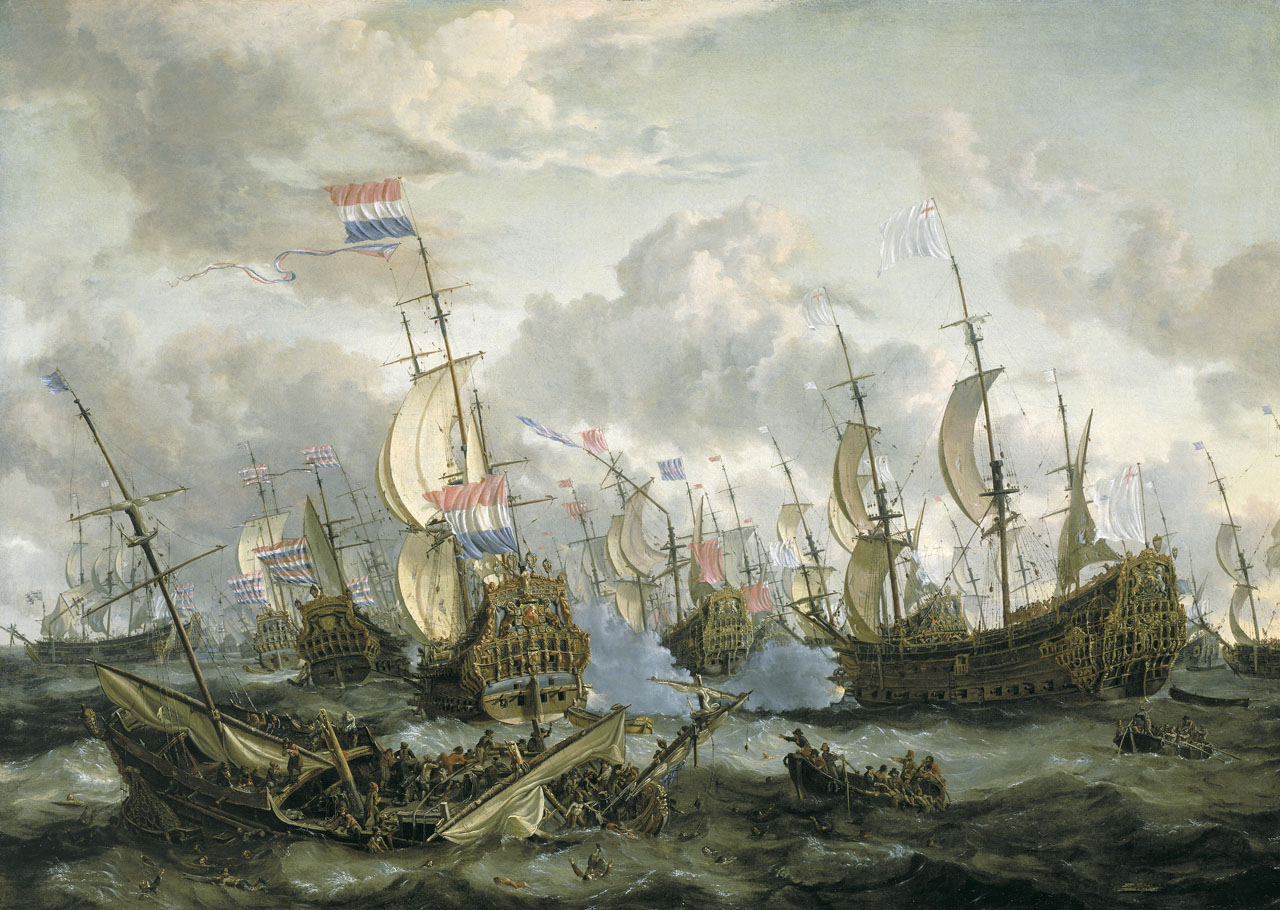
 At the end of the Golden Age, the Netherlands were at war with England, a battle that is being fought at sea. In this lesson students draw a sea ship from that time. 

What do you need?

  • drawing sheet A3 size
  • drawing sheet A4 size
  • liquid water color
  • brush
  • oil pastel crayons
  • scissors and glue
  • ice cream sticks
  • boxcutter
  • cutting plate
  • newspapers 
Instruction
Study paintings of ships in a battle. What stands out? How do you recognize the Dutch and English ships? Which flags do you see more? What do you see in the foreground of the first painting? What can you tell about the sails? How can you see those ships are in combat? 

Naval battle Anglo-Dutch war(1666) by Abraham Storck

Burning of a part of the English fleet (1667). 
by Pieter van de Velde 

What should you do?
Step 1
Paint the background on the largest sheet with liquid water color paint. At the bottom (near by) the water is dark, further away it becomes lighter (add water). 
Step 2
Draw on the A4 sheet a VOC-ship with oil pastel and color it. Draw and color details which you see in the water during a naval battle, such as a life boat, anchor etc. Do not forget tho color the sails white!
Step 3
Paint your drawing with blue water color paint. Wipe the excess paint off the white sails with a paper towel. Let dry. 
Step 4
Cut out all parts, leaving a blue edge. Stick ice cream sticks behind the loose parts. Take the large painted sheet and choose the location of the ship and the other things. Cut slices of 3 cm in this sheet. Insert the sticks into the background and the artwork is done. 

Artworks made by students of grade 4.
Source: Laatmaarleren.nl 

Sunday, November 8, 2020

Same insect - different colors


made by student of grade 1

You need:
  1. drawing sheets A5 size
  2. crayons
  3. liquid watercolor paint 
  4. brush
Draw two the same insects and color them with crayons: one with cool colors, the other with warm colors. 
Paint the background with dilluted watercolor paint: warm colors for the 'warm' insect, cool colors for the 'cool' insect. 


Element of art: color.

Saturday, January 12, 2019

Cat on head - like Corneille


Made by a student of grade 3
You need:
  1. drawing sheet A3 size
  2. oil pastels
  3. liquid watercolor paint
  4. brushes
Corneille painted often cats, birds and women. There are some paintings where he painted the cat on the head of a woman!
Show Corneille paintings on the digital board or use google: 'Corneille woman cat'.

Who of you has a cat at home? Does it ever lie with you? Does your cat ever lie on your head?
Look at these artworks. What do you see? Why would the painter left the cat's eyes white?  Do the women on the paintings have hair? 

Draw a head on your sheet with oilpastel (dark color). Maybe your own head, but you may choose another head too. Draw a cat sitting, standing or lying down on the head. The cat looks like hair! What hairstyle it is, had to do with the position of the cat. 
Color your drawing with bright colors. Trace the outlines with a dark color if necessary and paint the background with liquid watercolor paint. 

Made by a student of grade 3

There are more lessons about Corneille on this blog! Use the search function. 

Thursday, September 13, 2018

Patterned trees collage

You need:
  1. white drawing sheet A3 size
  2. liquid water color paint
  3. brush
  4. construction paper in several colors
  5. scissors and glue
  6. black fine marker
Fold the sheet in two. Paint the upper half blue, the  lower half green. Leave the edges white. 
Cut several shapes from construction paper: ovals, 'clouds', circles.   
Use a fineliner to draw the trunk and fill the shapes with a variety of patterns.  
Paste the shapes on the painted sheet and be sure the shapes overlap each other to suggest depth.

Wednesday, September 12, 2018

Portfolio: Bad Hair Day

You need:
  1. white sheets
  2. liquid watercolor paint
  3. straws
  4. oil pastel crayons
How to draw a face? We used the website Wikihow. Students draw their own face on a large white sheet and color it with oil pastels. Drop liquid water color in several colors above the head and blow it in different directions using straws. 


On the photo our proud third grade students with their portfolio's in which we collected all the artwork of this school year.

Monday, April 11, 2016

Funny houses like James Rizzi


Made by Kalen, grade 4

You need:
  1. white drawing sheet
  2. crayons 
  3. liquid watercolor paint
  4. brushes
  5. jars with water 
James Rizzi was born in 1950 in Brooklyn. He studied art in Florida, where he started experimenting with printing, painting and sculpting. Rizzi’s work often shows his birthplace New York. His paintings look sometimes childishly naive, with the bright colors and brilliant gaiety. In the art press Rizzi is often described as "Urban Primitive Artist '. Rizzi himself says he is influenced by Picasso, Klee and Dubuffet.

Made bij Jade, grade 4

Show some paintings of Rizzi and discuss the characteristics:
  • bright colours
  • no gradations within colours
  • evertything is outlined with black
  • houses have human faces/characteristics
  • the artwork is full and busy
  • background is full too
Students use a dark color crayon to draw a house in Rizzi style, a house with human characteristics like hair, mouth, eyes etc. 
Paint with liquid water color paint.

Tuesday, October 28, 2014

Halloween cat and window


Made by a student of grade 4
You need:
  1. white drawing sheet
  2. liquid water colour paint 
  3. brush
  4. black construction paper 
  5. cutting knife and mat
  6. glue
  7. black marker 
  8. white chalk pastel
  9. carbon paper
  10. pattern
Paint a white sheet with yellow and orange liquid water colour paint. Enlarge the pattern and trace it on the black sheet using carbon paper. Put a cross in the parts that have to been cut. Cut the pattern and paste it on the coloured sheet.
Draw Halloween details with black marker. Use the white chalk pastel for details on the black paper. 


Source: halloweenwitchesflyinmachine.blogspot.nl/

Friday, March 14, 2014

Stacked birds

 
Made by students of grade 3/4

You need:
  1. drawing sheet 20 by 40 cm
  2. crayons
  3. liquid watercolour paint
  4. brushes
Inspirated by a picture on Pinterest.
Draw at least three birds sitting on eachothers back. The birds have to get smaller while getting higher. Colour with crayons.
Paint the background with liquid watercolour paint leaving an edge from about 1 cm. 

Thursday, February 6, 2014

The best nest


  1. drawing sheet
  2. oilpastel
  3. liquid watercolour paint
  4. brushes
  5. 3D tape
The best nest for birds in winter is a colourful one! This birdhouse will protect birdies against snow and cold.

Students draw a birdhouse and colour it in with oil pastels. Perhaps there's also a  peanut pendulum on the house. Draw  snowflakes (white oil pastel) and also a layer of snow on the house.
Paint the background with liquid watercolor. Leave about 1 cm white on the edges for an extra winter look. Draw (or print) a bird on another piece of paper and cut it. Paste it in the house using 3D tape for a spatial effect (the pads that are used to create 3D cards).

Made by students of grade 1/2

Monday, October 7, 2013

Singing in the rain

Artwork made by a student of grade 1
You need:
  1. white drawing sheetA2 size
  2. crayons
  3. liquid watercolour
  4. brush
Students draw a person under an umbrella and colour it in with crayons. Then they draw raindrops with white crayon. Paint the entire drawing with liquid watercolour.

Be sure that:
  • rain falls from top to bottom;)
  • under the umbrella is no rain
  • rain is transparent, so we draw with white on white!
  • rain forms puddles on the ground